The evidence-based professional profile: what it is and how to build one
The short answer
An evidence-based professional profile is a profile where every important claim sits next to what supports it: a public record, a work sample, observed activity or a reference. Each claim says how strong its support is, and missing evidence is shown rather than hidden. The goal is not to prove everything. It is to let the reader see what is known, what is stated and what is still open.
Why self-description is no longer enough
Resumes and most online profiles are made of assertions. You write that you led a migration, grew revenue or shipped a product, and the reader has to decide how much to believe. For decades that was the best anyone could do, because checking was slow and expensive.
Two things changed. First, a large share of real work now leaves a trace somewhere: in repositories, design files, published articles, company announcements, certificates and project tools. Second, polished writing became free. Anyone can produce a confident, well-phrased summary in seconds.
An evidence-based profile is a response to that shift. It keeps your own description, because context matters, but it connects that description to the material that supports it and is honest about the parts that have no support yet.
The anatomy of a supported claim
A claim with evidence has five parts. Most profiles only have the first one.
- The claim. One specific statement. “Co-founder and CEO of Aisti Analytics, 2016 to 2019” is a claim. “Experienced leader” is not.
- The source. Where the support comes from: an announcement, a repository, a document, a person.
- The scope. What exactly the source supports, and what it does not.
- The label. A plain word for the kind of support, such as Stated, Observed or Public record.
- The visibility. Who can see the claim, and separately, who can see the evidence.
The scope line is the part people skip, and it is the part that makes a profile trustworthy. A public announcement can confirm that an acquisition happened without confirming every sentence in the role description. Saying so out loud costs nothing and makes every other claim on the page more believable.
Labels, not scores
It is tempting to summarise evidence as a number: a trust score, a percentage, a badge level. Numbers hide the one thing a reader needs to know, which is what kind of support exists. A label keeps that visible.
| Label | What it means | Example |
|---|---|---|
| Stated | You describe it. No source is linked yet. | “I led weekly planning for a team of six.” |
| Observed | The activity can be seen in a source you connected. | Commits to a repository, a published design file. |
| Contextual | A record supports the context, but not every detail. | A company page confirms the company and your role title. |
| Public record | A public document records the fact. | An acquisition announcement, a patent, a published award list. |
| Unconfirmed | Something a reader might expect is missing, and the profile says so. | No rate or availability date stated. |
These are not steps on a ladder. A Stated claim is not a failure; most of what people do never produces a public record. The label simply tells the reader how to read it.
Five rules for honest evidence
These principles guide how Kleoverse treats evidence. They apply whether you use a tool or build your profile by hand.
A repository supports “contributed to this project”. It does not support “excellent engineer”. Attach evidence to the narrowest claim it actually proves.
If a press article quotes your own LinkedIn summary, it is the same claim twice, not independent confirmation.
Show what is not supported yet. A reader who sees honest gaps trusts the filled parts more.
Watching a course, starring a repository or attending an event shows interest or exposure. It does not establish skill, authorship or completion.
You can publish “Reduced invoice processing time by 40%” and keep the internal report private. The claim is public; the evidence is shared only when you choose.
Examples by profession
Evidence looks different in every kind of work. These illustrative profiles show what strong, honest support can look like.
 Emma CarterPlatform engineer · illustrative
“Built the event-driven billing service.”
- Observed Authored the event consumer and retry service in the billing repository.
- Stated Emma describes leading the move off nightly batch jobs.
- Unconfirmed The revenue impact is not supported by a source.
Strong on contribution, honest about business outcome.
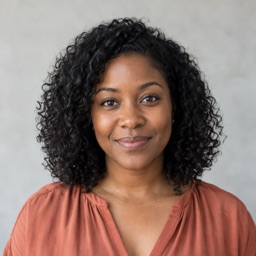 Maya OkaforProduct designer · illustrative
“Redesigned onboarding for a mobile banking app.”
- Observed Public case study with before and after flows.
- Contextual The client’s app store notes mention the new onboarding.
- Stated Completion rate improvement, with the analytics kept private.
The work is visible; the confidential numbers stay private.
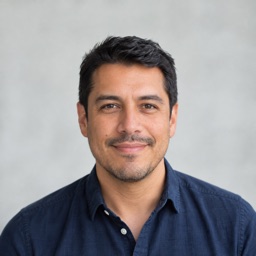 Daniel ReyesOperations lead · illustrative
“Ran warehouse operations across two sites.”
- Contextual Company page lists Daniel as operations lead.
- Stated A former manager’s reference, shared on request.
- Public record Forklift and safety certifications.
Operations work rarely leaves public traces. References and certificates carry the weight.
Notice that none of these profiles is “fully verified”, and none needs to be. Each one is clear about which parts are supported and how.
How it compares to a resume, a profile and a portfolio
| Resume | Online profile | Portfolio | Evidence-based profile | |
|---|---|---|---|---|
| Main content | Titles, dates, bullet points | Self-description, connections | Selected work samples | Claims connected to what supports them |
| Shows what supports a claim | No | Rarely | For the work shown | For every important claim |
| Shows gaps honestly | No | No | No | Yes |
| Keeps up with your work | Rewritten each time | If you remember | Occasionally | Updates from connected sources |
| Private proof possible | No | No | No | Yes, evidence visibility is separate |
| Readable by AI systems | Varies by file | Varies by platform | Varies | Designed for it |
Build yours in an afternoon
You do not need to connect everything at once. Start with the claims that matter most for what you want next.
- Pick five claims. The ones you would most want a stranger to believe. Make each one specific: a project, a result, a period.
- Find one source for each. A link, a file, a repository, an announcement or a person who can confirm it.
- Write the scope. One line on what the source supports and what it does not.
- Label honestly. Stated, Observed, Contextual or Public record. Leave Stated claims as they are; do not inflate them.
- Decide visibility twice. Is the claim public? Is the evidence public, shared on request, or private?
- Add one honest gap. Something a reader might expect that you cannot support yet. It makes the rest more credible.
Common mistakes
- Overclaiming from a source. A certificate shows you completed a course, not that you are an expert in the subject.
- Badge stacking. Ten logos and badges with no claim attached tell the reader very little.
- Making all evidence public. Client documents, salary letters and internal reports rarely belong on a public page. Publish the claim; share the proof on request.
- Confusing identity with achievement. Matching your name across accounts shows the accounts are consistent. It does not verify what you did in them.
- Hiding the gaps. Readers notice what is missing. Saying it first is a signal of honesty.
Questions
Is an evidence-based profile the same as a verified profile?
No. Verification usually means a single yes or no about identity or a credential. An evidence-based profile shows the kind and strength of support for each claim, including claims that have no support yet.
Do I need public evidence for everything?
No. Much good work never produces a public record. Label those claims as Stated, add a reference or private document if you have one, and let the reader see the difference.
What if my work is confidential?
Publish the claim at the level you are allowed to share, and keep the evidence private or available on request. The profile can say that supporting material exists without exposing it.
Does this replace my resume?
It can sit behind it. Many applications still ask for a resume. Generate the resume from your evidence-based record and link to the record for anyone who wants the detail.
Can AI tools use an evidence-based profile?
Yes, if the profile is published in a structured, readable form. Claims with sources and explicit gaps are much harder for an AI to misdescribe than a block of self-description.
See it on a real profile.
Every claim on the Kleoverse example profile shows where it comes from, including the gaps.